

Pine Needle Oil for Immune System Support

Table of Contents
- How Pine Needle Oil Supports Your Immune System
- Pine Needle Oil Benefits: What the Research Shows
- Pine Oil vs. Pine Needle Oil: What's the Difference?
- Pine Needle Oil Dosage: How Much and How Often
- Pine Needle Oil Safety: What You Need to Know Before Starting
- Choosing Quality Pine Needle Oil: Sourcing, Sustainability, and What to Look For
- Conclusion: Making an Informed Choice for Immune Support
- Frequently Asked Questions
Last Updated: October 12, 2026
How Pine Needle Oil Supports Your Immune System
Pine needle oil for immune system support has moved from folk tradition into mainstream wellness. Distilled from Pinus densiflora needles, it contains ascorbic acid, chlorophyll, and terpenes like alpha-pinene and beta-pinene. Live Pine has supplied superior Red Pine needle oil since 2004.

Pine needle oil is a concentrated extract made from the needles of pine trees, typically Pinus densiflora, that contains vitamin C, chlorophyll, rutin, and volatile compounds studied for their antioxidant and antimicrobial properties. Unlike citrus-based vitamin C supplements, it delivers these nutrients alongside terpenes and shikimic acid, which appear to work together rather than in isolation.
What Makes Pine Needle Oil Different from Other Essential Oils
Most essential oils are valued for aroma or topical use. Pine needle oil is also consumed as a dietary supplement, in capsules or as a liquid extract. The needles supply vitamin C and chlorophyll, while distillation concentrates the volatile compounds behind its antimicrobial properties.
A common mistake is assuming all pine products are interchangeable. They are not, and the distinction matters for safety and effectiveness.
Pine Needle Oil Benefits: What the Research Shows
The documented benefits of pine needle oil center on three areas: antioxidant activity, anti-inflammatory effects, and respiratory support. In vitro studies have examined how these compounds interact with free radicals and microbial cells, though human clinical trials remain limited.
Antioxidant and Anti-Inflammatory Activity
Pine needle extracts contain phytochemicals that scavenge free radicals, the unstable molecules linked to cellular aging and immune decline. According to National Center for Complementary and Integrative Health overview of antioxidant supplements, antioxidant compounds from plant sources can support cellular protection, though the body absorbs and uses them differently depending on the food matrix.
The chlorophyll in Red Pine needle oil is structurally similar to hemoglobin, and some research suggests it supports red blood cell regeneration. The terpenes, alpha-pinene and beta-pinene, are studied for their own antioxidant and anti-inflammatory behavior.
Bioavailability: Why the Format You Choose Changes What You Absorb
The practical takeaway: for terpene-driven respiratory and antimicrobial activity, an oil or capsule is the more logical route. For vitamin C, a gently steeped tea is more direct, and a citrus supplement more reliable still.
Respiratory and Antimicrobial Support
Pine needle oil has a long history as an expectorant in traditional herbalism, used to loosen respiratory congestion and calm airway inflammation. The terpenes, particularly alpha-pinene, are the likely mechanism.
Beyond the respiratory system, pine needle oil shows antimicrobial properties against certain bacteria and fungi in laboratory settings.
Pine Oil vs. Pine Needle Oil: What's the Difference?
Pine oil is typically distilled from pine wood, stumps, or resin, and it is not meant for consumption. It is used in cleaning products, industrial solvents, and some topical applications. Pine needle oil is extracted specifically from the needles, which is why it contains vitamin C, chlorophyll, and the nutritional profile that makes it suitable as a dietary supplement.
If a label says "pine oil" without "needle," treat it as a topical or industrial product, not something to ingest. The two are chemically distinct, and confusing them is a genuine safety risk.
| Feature | Pine Oil | Pine Needle Oil |
|---|---|---|
| Source | Wood, stumps, resin | Needles of Pinus densiflora |
| Edible | No | Yes, in supplement form |
| Key compounds | Turpentine, resin acids | Vitamin C, chlorophyll, rutin, terpenes |
| Primary use | Cleaning, industrial, topical | Immune support, wellness supplement |
| Typical format | Liquid concentrate | Capsules or liquid extract |
Pine Needle Oil Dosage: How Much and How Often
There is no single official dosage for pine needle oil, which is why we provide guidance with every product we sell. For capsules, many users begin with one 450mg capsule daily and increase gradually. Liquid oil is dosed in drops, and concentration varies by brand.

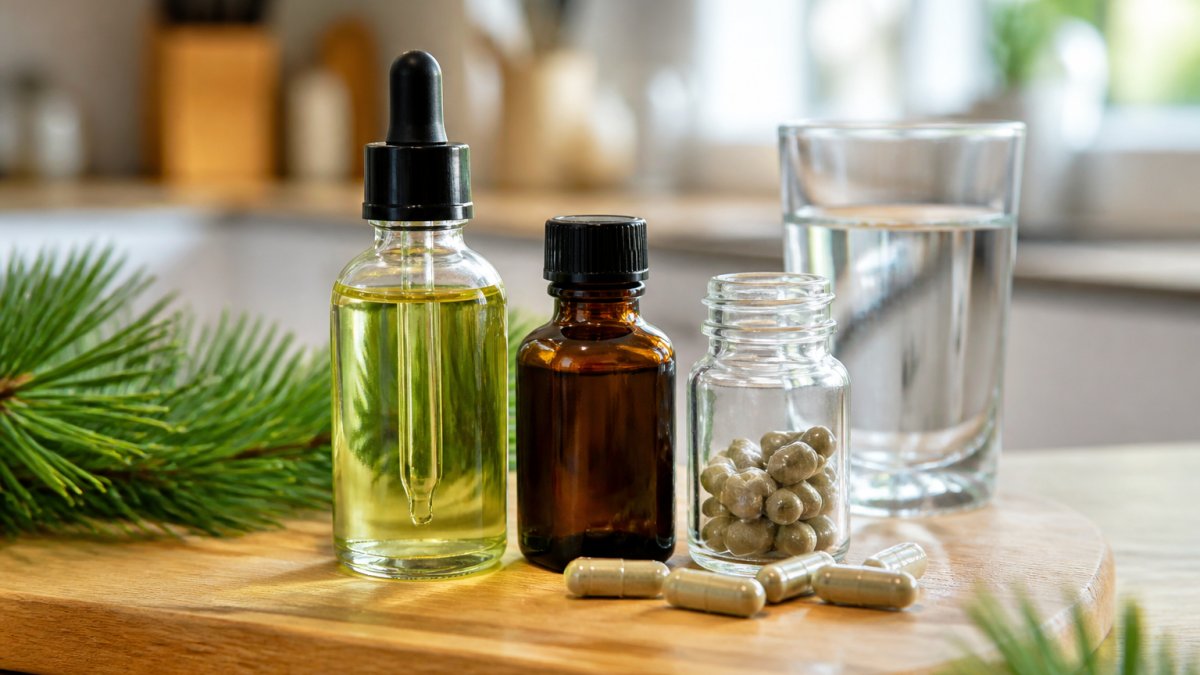
Capsules vs. Liquid Oil: Choosing Your Format
Capsules offer convenience and pre-measured dosing, easier for daily use and travel. Liquid oil allows more precise dose adjustment but requires a dropper and careful storage.
Live Pine offers both: Wild Crafted Red Pine Needle Oil capsules in 60-count and 120-count bottles, plus a 2oz liquid extract for those who prefer drops.
Pine Needle Oil Safety: What You Need to Know Before Starting
Pine needle oil is generally well tolerated when used as directed. The most serious risks fall into two buckets: drug interactions and species misidentification.
Drug Interactions You Should Take Seriously
Pine needles contain vitamin C, rutin, and shikimic acid, and the oil's terpene content can affect how the body handles certain medications. Higher-dose vitamin C and some pine-derived flavonoids can influence platelet function, compounding the effect of anticoagulants.
Wild Crafted Red Pine Needle Oil 60 Veggie Capsules of Superior Pine Needle Oil →
A second category involves immunosuppressant and immunomodulating drugs. Anyone on tacrolimus, cyclosporine, methotrexate, or biologic therapies for autoimmune conditions should not stack an immune-active botanical on a regimen designed to suppress immune activity.
A third category is blood sugar medication. Some conifer extracts have shown glucose-lowering activity in laboratory settings, so people managing diabetes with insulin or sulfonylureas should monitor closely and consult a clinician first.
According to U.S. Food and Drug Administration guidance on dietary supplement interactions, supplement-drug interactions are underreported, and your pharmacist is often the fastest source of accurate information. Bring the actual bottle to your pharmacy counter and ask.
The Misidentification Risk Nobody Talks About
If you plan to harvest pine needles yourself for tea or homemade extract, you must be certain of the species first. Not every evergreen is a pine, and some lookalikes are genuinely dangerous.
- Yew (Taxus species): The flat, dark-green needles and red, cup-shaped berries make yew a common landscaping plant. Every part except the fleshy berry aril contains cardiotoxic taxine alkaloids. There is no safe home preparation; ingestion can cause sudden cardiac arrest, documented in both people and livestock.
- Norfolk Island pine: Despite the name, it is not a true pine and is not a safe edible substitute.
- Other conifers (spruce, fir, hemlock): Some are used in traditional teas, but "hemlock" here refers to the conifer, not the deadly poison hemlock, a naming overlap that has caused real confusion. Do not rely on common names.
How to confirm you have a true pine: True pines (Pinus genus) grow needles in bundles called fascicles, wrapped at the base by a papery sheath. The bundle count is a reliable identifier, Red Pine (Pinus resinosa) and Pinus densiflora typically bundle two needles, while other species bundle three or five. If needles attach singly with no bundle sheath, it is not a pine. If you cannot confidently count the bundle and see the sheath, do not harvest.
This is why buying from a supplier that names the species on the label is a safety decision, not just a quality one.
Who Should Avoid Pine Needle Oil
- Pregnant and nursing women: Insufficient safety data exists for use during pregnancy or breastfeeding.
- People on blood thinners or antiplatelet drugs: The oil may interact with anticoagulant medications such as warfarin, and with antiplatelet drugs like clopidogrel.
- People on immunosuppressants or with autoimmune conditions: An immune-active botanical can work against a suppressive regimen.
- People managing diabetes on medication: Monitor blood sugar and consult a clinician first.
- Anyone with a pine or conifer allergy: Cross-reactivity is possible with related plant allergies.
- Children: Unless a pediatrician specifically approves it, avoid use in young children.
- People scheduled for surgery: Stop use at least two weeks before any surgical procedure, because of the bleeding-risk question.
If you take prescription medication for a chronic condition, check with your pharmacist before your first dose. The oil can be a reasonable part of a wellness routine, but only when the interaction and identification questions have real answers.
Choosing Quality Pine Needle Oil: Sourcing, Sustainability, and What to Look For
Quality varies enormously in this category, and price alone does not tell you which bottle is worth buying. What matters is species, sourcing method, and processing standard.
Look for these markers on any pine needle oil you consider:
- Species named on the label. Pinus densiflora is the species most studied for its nutritional profile. If the label just says "pine," you cannot verify what you are getting.
- Wild-crafted or organic sourcing.
- Steam-distilled, no additives. The best extracts list no carriers, no added water, and no preservatives.
- Sustainable harvest claims you can verify. Ethical wildcrafting means needles are hand-picked without damaging the tree. Ask the supplier how they source.
- Third-party testing. Heavy metal detoxification claims are meaningless without a certificate of analysis confirming the oil is free of contaminants.
Live Pine's Red Pine needle oil is wild-harvested and hand-picked from Pinus densiflora trees, steam-distilled in small batches, and sold with no synthetic additives. We have been the first importer and health distributor of this specific oil since 2004, and we provide dosing guidance with every purchase.
Conclusion: Making an Informed Choice for Immune Support
The biggest challenge with pine needle oil is not finding a bottle. It is finding one you can trust, at a dose you understand, from a source that can prove what it claims.
If you want a pine needle oil that names its species, documents its sourcing, and comes with real guidance on how to use it, that is exactly what we built Live Pine to provide. Our Wild Crafted Red Pine Needle Oil is steam-distilled from wild-harvested Pinus densiflora, sold in pre-measured 450mg capsules, and backed by more than two decades of expertise in this single ingredient.
Get started with Live Pine and give your immune system a supplement you can actually trace back to the tree it came from.
Frequently Asked Questions
What are the benefits of pine needle oil?
Pine needle oil from Pinus densiflora contains chlorophyll, iron, beta-carotene, vitamins A and C, plus rutin and shikimic acid. It supports immune function through antioxidant activity, helps the body produce glutathione, and provides antimicrobial and anti-inflammatory properties. Traditional use includes respiratory support and cellular protection. Live Pine's Red Pine Needle Oil delivers these compounds in both capsule and liquid formats for daily use.
What is the difference between pine oil and pine needle oil?
Pine oil is typically extracted from pine wood, bark, or resin and is often used for industrial cleaning or as a fragrance. Pine needle oil comes specifically from the needles of pine trees, particularly Pinus densiflora, and retains a different set of bioactive compounds including chlorophyll, shikimic acid, and vitamins. For immune system support, pine needle oil is the appropriate choice because of its nutritional profile and traditional medicinal use.
What safety precautions should you take when using pine needle oil?
Start with a low dose to assess tolerance. If you take blood-thinning medications, have a bleeding disorder, or are pregnant or nursing, consult your healthcare provider first. Pine needle oil can interact with anticoagulants. Do not apply undiluted essential oil to skin without testing. When taking capsules, follow the label directions and keep the oil away from children. Store liquid oil with the original cap, not the glass dropper, to prevent rubber degradation.
How can pine needles be used for medicinal purposes?
Pine needles can be consumed as a tea or infusion. For consistent immune support, standardized capsules or measured liquid oil provide reliable dosing. Live Pine offers 450mg veggie capsules and a concentrated 2oz liquid oil, both made from wild-crafted Pinus densiflora and steam-distilled in small batches to preserve natural compounds.
